Ebook Free Privatising Culture
From the mix of expertise and also activities, somebody could improve their skill and ability. It will certainly lead them to live as well as function better. This is why, the pupils, employees, and even employers ought to have reading practice for publications. Any book Privatising Culture will certainly offer specific understanding to take all perks. This is what this Privatising Culture informs you. It will certainly include more expertise of you to life and also work far better. Privatising Culture, Try it and also prove it.
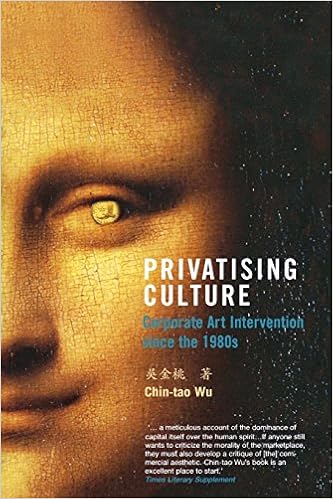
Privatising Culture

Ebook Free Privatising Culture
Are you outstanding of Privatising Culture that truly features just what you require currently? When you have actually not known yet about this publication, we recommend this publication to read. Reading this publication doesn't suggest that you always have to be great reader or a really publication fan. Checking out a publication in some cases will certainly become the means for you to urge or reveal exactly what you remain in perplexed. So currently, we really invite this publication to recommend not only for you however likewise all people.
Many duties in this recent age need the book not just from the current publication, yet additionally from the old book collections. Why not? We serve you all collections from the earliest to the newest books on the planet libraries. So, it is very completed. When you feel that guide that you have is truly publication that you intend to read now, it's so pleasured. But, we really recommend you to review Privatising Culture for your very own need.
Reading absolutely this publication can create the precise demand and also severe means to go through and conquer this trouble. Book as a home window of the world can have the precise situation of exactly how this publication exists. Privatising Culture as we suggest being candidate to review has some advances. Besides it is viewed from exact same subject as you require, it has additionally fascinating title to check out. You can likewise see how the design of the cover is stylised. They are actually well done without disappointment.
After setting up the interaction of you in order to choose such publication, you could directly find and also reach download and install and also make deal with the Privatising Culture The source can be received from link to give here. As one of the best publication website on the planet, we constantly offer the best points. Of course, the book that we offer always guide that provides extraordinary point to find out as well as obtain. If you think that you really need this book currently, get it immediately.
Corporate sponsorship and business involvement in the visual arts have become increasingly common features of our cultural lives. From Absolut Vodka’s sponsorship of art shows to ABN-AMRO Bank’s branding of Van Gogh’s self-portrait to advertise its credit cards, we have borne witness to a new sort of patronage, in which the marriage of individual talent with multinational marketing is beginning to blur the comfortable old distinctions between public and private.Chin-tao Wu’s book is the first concerted attempt to detail the various ways in which business values and the free-market ethos have come to permeate the sphere of the visual arts since the 1980s. Charting the various shifts in public policy which first facilitated the entry of major corporations into the cultural sphere, it analyses the roles of governments in injecting the principles of the free market into public arts agencies—in particular the Arts Council in Great Britain and the National Endowment for the Arts in the USA. It goes on to study the corporate take-over of art museums, highlighting the ways in which ‘cultural capital’ can be garnered by various social and business ‘elites’ through commercial involvement in the arts, and shows how corporations have succeeded in integrating themselves into the infrastructure of the art world itself by showcasing contemporary art in their own corporate premises.Mapping for the first time the increasingly hegemonic position that corporations and corporate elites have come to occupy in the cultural arena, this is a provocative contribution to the debate on public culture in Britain and America.
Your recently viewed items and featured recommendations
›
View or edit your browsing history
After viewing product detail pages, look here to find an easy way to navigate back to pages you are interested in.
Product details
Paperback: 392 pages
Publisher: Verso; Revised ed. edition (July 10, 2003)
Language: English
ISBN-10: 1859844723
ISBN-13: 978-1859844724
Product Dimensions:
6 x 0.8 x 9 inches
Shipping Weight: 1.6 pounds (View shipping rates and policies)
Average Customer Review:
4.0 out of 5 stars
1 customer review
Amazon Best Sellers Rank:
#186,463 in Books (See Top 100 in Books)
By approaching her subject systematically through the use of social scientific methods, as well as through the lens of critical theorists such as Pierre Bourdieu, the author touches on some very pressing issues in the world of contemporary art. Rather than simply approaching her topic in the context of art history, the author (importantly) utilizes a cultural studies approach couching her analysis of the visual art world within a broader socio-economic context. She does not take private patronage of the arts as a natural given, but rather critically examines the shift from the individual collector of fine art to corporate sponsorship of the arts as composed of such individuals. Further, the author critically explores the interrelationships of economically powerful corporations to public governmental funding agencies, and how each is imbricated in the larger discourses of art and the public sphere, the relationships of power to the production of knowledge, and the political economy of the contemporary art world as it emerged through the neo-liberal economic policies of the Thatcher and Regan governments.While her use of case studies and 'hard' data adds credence to the text, it is the authors critical voice that is most compelling. This is a very insightful book for all stakeholders in the world of contemporary art who are interested in interrogating the complex relationship between art and commerce, and its implications for the public sphere. While it is true that today the arts must depend on both private and public funding in order to survive, it remains important to to understand HOW the arts are funded (and in relation to systems of power).Note: To approach the text with the reductive and simplistic belief that private funding for the arts is a "fact of life" will have been to completely miss the point and the book will be less useful.
Privatising Culture PDF
Privatising Culture EPub
Privatising Culture Doc
Privatising Culture iBooks
Privatising Culture rtf
Privatising Culture Mobipocket
Privatising Culture Kindle